

As you probably already know, the fall and winter seasons are when kids get sick the most. With children back in school and surrounded by other kids, they are more susceptible to bringing home germs! And while it’s impossible to prevent every illness, there are steps you can take to reduce your child’s exposure to germs and keep them healthy throughout the school year.
Quick answer: Kids pick up germs easily at school. Teach them to wash with soap and water for at least 20 seconds, cough into an elbow, and skip sharing drinks. Keep vaccinations current, and keep kids home with a fever, diarrhea, or vomiting. Rockaway parents can call our office with any questions about illness prevention.
Why do kids get sick so easily at school?
Viruses and bacteria spread more easily when kids are in close contact with each other. Children frequently touch shared objects and then may forget to wash their hands before touching their faces or eating. Viral illnesses like the common cold can spread through coughing, sneezing, and contact with contaminated surfaces. When children touch their eyes, nose, or mouth after picking up viruses, they may become infected.
What healthy habits help reduce the spread of germs?
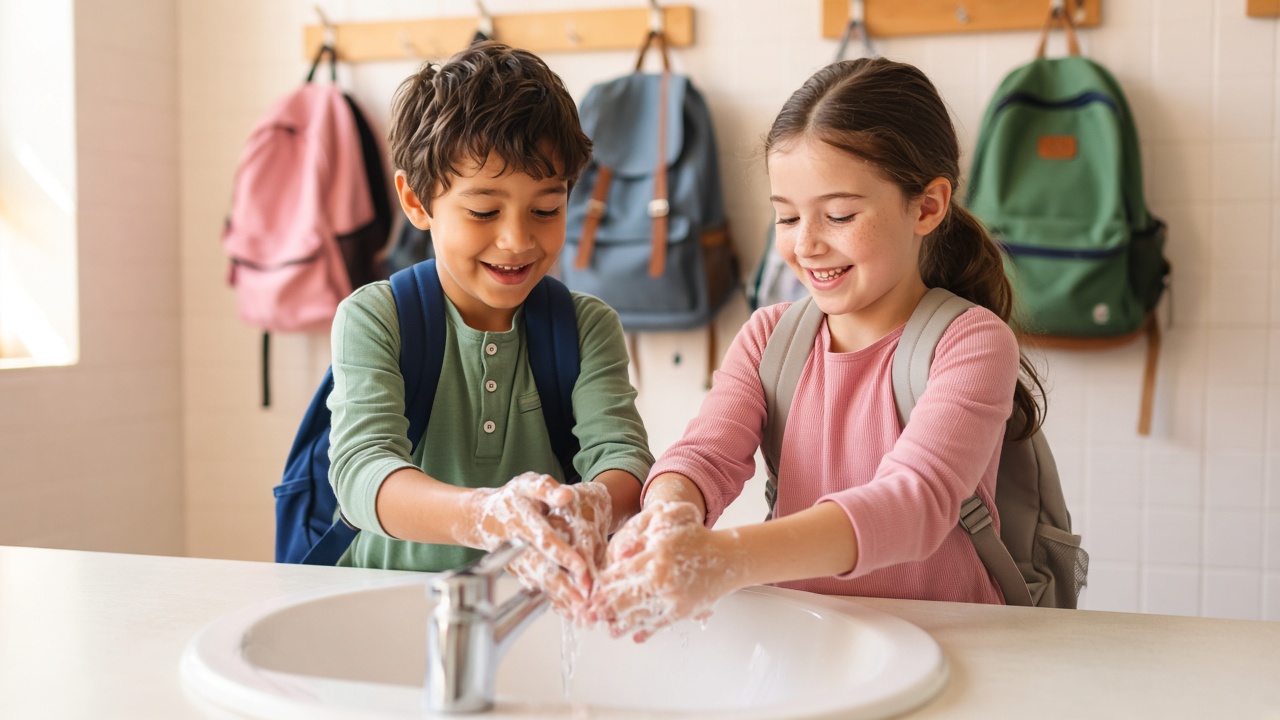
Teaching children healthy habits early can make a difference in reducing the spread of germs. Encourage your kids to wash their hands with soap and water for at least 20 seconds, especially before eating, after using the bathroom, and after coughing or sneezing. Remind your kids to cough or sneeze into their elbow or shoulder instead of their hands. If they use a tissue, they should throw it away immediately and then wash their hands. It’s also important to teach them not to share water bottles, drinks, or utensils with classmates.
Additionally, you’ll want to keep their school supplies clean. Regularly wipe down their backpacks, electronic devices, and other frequently touched items. Reusable water bottles and lunchboxes should be washed daily as well.
How do sleep, nutrition, and vaccines help prevent illness?
Illness prevention also includes prioritizing sleep and nutrition. Make sure your child gets enough sleep, eats well-balanced meals, stays hydrated, and also gets regular physical activity. Staying healthy can help the body fight off viruses and bacteria more quickly. It’s also important that your children stay up to date on vaccinations, which keeps them protected against preventable illnesses.
How can families limit germs at home?
When kids do bring germs home from school, other family members may be exposed. Maintaining a regular cleaning routine can help reduce the risk of infections spreading throughout the household. Disinfect surfaces, such as doorknobs, countertops, and bathroom fixtures. Encourage everyone in the household to wash their hands frequently with soap and water.
Some families wonder if they should use antibacterial soap for better effectiveness, but this is not necessary. Regular soap is enough. Routine use of antibacterial soap can strip away natural oils and kill good bacteria that protect the skin.
When should a sick child stay home from school?
Even with good prevention habits, children will sometimes get sick. Knowing when to keep them home is important for their recovery and for preventing illness from spreading. Kids should stay home when they have a fever, have diarrhea, or are vomiting. If your child has sick symptoms, monitor how they’re feeling and follow your school’s illness guidelines.
When should I contact my pediatrician?
Contact your pediatrician if your child experiences difficulty breathing, persistent symptoms, ear pain, unusual fatigue, or a fever above 102°F. Infants three months or younger should be evaluated by their pediatrician at the first sign of illness.
Most healthy children recover from common illnesses on their own within a week. But if their symptoms get worse, they should be seen by the doctor.
Frequently asked questions
How long should kids wash their hands?
Encourage your kids to wash their hands with soap and water for at least 20 seconds, especially before eating, after using the bathroom, and after coughing or sneezing.
Do we need antibacterial soap to keep germs away?
No. Regular soap is enough. Routine use of antibacterial soap can strip away natural oils and kill good bacteria that protect the skin.
When should my child stay home from school?
Kids should stay home when they have a fever, have diarrhea, or are vomiting. Monitor how they’re feeling and follow your school’s illness guidelines.
When should I contact my pediatrician about my child’s illness?
Contact your pediatrician if your child experiences difficulty breathing, persistent symptoms, ear pain, unusual fatigue, or a fever above 102°F. Infants three months or younger should be evaluated by their pediatrician at the first sign of illness.
If you have questions about your child’s symptoms or illness prevention, please call or contact our office. Peninsula Pediatrics proudly cares for families across the Rockaways, including Rockaway Park, Belle Harbor, Neponsit, Rockaway Beach, Arverne, and Far Rockaway.


