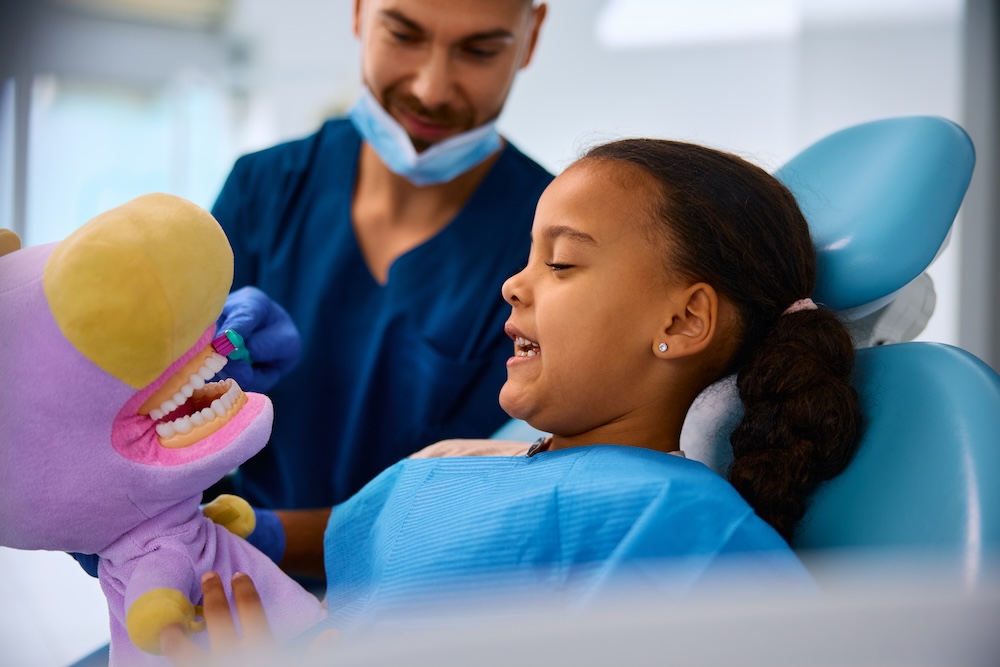


Children’s Dental Health

February is Children’s Dental Health Month and something to always remember when it comes to your child’s health is that their oral health is important for their overall health. Your child’s dental health begins when they get their first tooth, which typically occurs when they’re between 4 and 7 months old. Once you see their first tooth erupts, you’ll want to start tooth brushing by using a soft-bristled brush that’s specifically designed for babies. Make sure to only use a small smear of toothpaste (about the size of a grain of rice) until they reach age 3. It is also recommended to use toothpaste that contains fluoride, a natural mineral which strengthens the enamel and helps prevent tooth decay. 

After your child reaches the age of 3, you can start to use a pea-sized amount of fluoride-containing toothpaste. And when your child is able to brush their own teeth, they can begin to use a normal amount. This is usually when they’re about 5 or 6 years old. At this point, you’ll want to make sure that your child is taught the proper techniques of tooth brushing and good oral hygiene practices. Encourage them to brush their teeth twice a day for 2 minutes during each session. Children should brush their teeth thoroughly from top to bottom and inside and out. You might also want to consider using music or a counting game that lasts 2 minutes to make the cleaning routine more fun and easier to stick to. Keep in mind that the back molars are the most common teeth to get cavities so remind your child to brush all the way back into their mouth to reach those areas. It’s recommended for families to supervise children when they’re cleaning their teeth until they’re about 10 years old. 

In addition to brushing the teeth, it’s also essential that your child flosses every day. Flossing removes plaque and food in between teeth where the toothbrush can’t reach. Without flossing, the plaque remains and can harden into tartar, leading to gum disease. For older children with braces or fixed retainers, they will need special types of floss products that are designed to get in between or around braces and retainers. 

Rinsing with mouthwash can help maintain your child’s dental health. However, it is not safe to use mouthwash until the child is 6 or 7 years old. Younger children may accidentally swallow it. Before your child starts using mouthwash, teach them how to rinse properly and warn them that mouthwash is never safe to swallow. It’s also best to buy mouthwash that is alcohol-free.  

Good oral hygiene practices are very crucial to protecting your children’s teeth. But diet is another key contributing factor for children’s dental health. Added sugar in candies, sweets, syrups, and sugary beverages can cause bacteria on your child’s teeth to grow and can lead to tooth decay. You’ll want to limit their consumption of added sugar and have them brush their teeth soon after consuming any of these items. The longer the residue stays in their mouth, the more damage it can cause. It is also important that your child maintains a well-balanced diet with plenty of calcium and Vitamin D, both of which are necessary to build strong teeth. 

When your child comes in for a well-check visit, we will always check in on their teeth and gums to make sure they’re healthy. It is also important that your child keeps up with regular dental visits for routine cleaning and checkups. Having your child’s teeth monitored helps ensure that any potential problems like cavities are addressed early before they can worsen. Children should start visiting the dentist by age one. 

Instilling good dental habits in your children can foster long-term dental health success so that your child’s teeth can develop strong and healthy. If you have any questions or concerns about your child’s oral health, please contact our office.  


Preparing Young Girls for Puberty and Menstruation

Puberty is the stage of life when your child’s body starts going through physical changes as it becomes sexually mature and capable of reproduction. For most girls, this is typically between the ages 8 and 13. The earliest sign you might see is the development of breast “buds,” which are tiny bumps under the nipple. Your child might start growing body hair as well, including pubic hair. Menstruation also begins about 2 or 3 years after the start of puberty. The average age in America for when girls get their first period is 12. As a parent, it’s important to talk to your child about the new changes they experience and to prepare them in advance. It’s likely your child will have questions and knowing how to answer common questions will make having these conversations easier. 

Breast development can make young girls anxious, especially since usually one breast starts developing before the other, causing the sizes of the breasts to be different. Let your daughter know that this is completely normal to ease any potential fears. You may also want to help them find new clothes and a training bra that disguises their breast development if it will make her feel more comfortable and less self-conscious.  

As your daughter starts growing body hair, she might show an interest in shaving and removing the hair. Keep in mind that this is a personal preference your child might have and it is not medically necessary. But if your child chooses to shave, it’s important to teach them how to do so safely. Without following precautions, shaving can cause cuts, razor burns, and irritation, leading to the risk of skin infection. Advise your daughter to always wet their skin first and apply lotion or gel. They should only apply light pressure when shaving and replace the razor or blade often. Razors should never be shared as that can cause an infection. There are electric shavers designed for girls that could be used as safer alternatives to traditional razors. 

As girls approach their first period, they may experience vaginal discharge which is usually clear or white. This can occur 6 months to a year before menstruation begins and is a response to the increase of estrogen happening in the body. Let your daughter know that this is normal. She might have questions about periods and you’ll want to make her feel comfortable to talk about it. It’s especially helpful to let your daughter know what to expect before they get their period. Talk to them about using menstrual products like pads and tampons and good hygiene practices, such as changing the pad or tampon often. If your child expresses concern about menstrual cramps and discomfort, let them know about home remedies that can help such as using a hot water bottle or heating pad, as well as taking an over-the-counter painkiller.  

Puberty brings about new changes for children as they make the transition into adulthood. And those changes can bring about uncertainty, confusion, and anxiety. By engaging in conversations with your child about puberty, you can make the navigation during this life stage easier for them. If you have any concerns about your child’s development or if you notice signs of early puberty (before age 8), call our office to talk to our pediatrician.


Tips for a Safe and Healthy Halloween

Halloween is just around the corner and whether it’s your child’s first or tenth Halloween, we have tips to ensure a safe, healthy, and fun celebration!

The holiday is an exciting time for kids to dress up in costumes, go trick-or-treating, enjoy candies and treats, and partake in the season’s festivities. But there are also extra risks to be aware of and precautions to follow. If you have a young child trick-or-treating, it’s important to have an adult accompany them. For older children, be aware of the route they’re taking and encourage them to stay in groups. They should also carry a phone with them that’s charged in case of an emergency.

Remind your kids about being careful on streets for oncoming cars and that they should always look both ways before crossing. Low visibility and distracted walking are common reasons for pedestrian injuries. It’s best to stick to sidewalks whenever possible and in well-lit areas.

As children are the most common victims of dog bites, teach your kids never to pet a dog at someone’s house or apartment without permission from the owner. It’s also important that they refuse to accept any candy or treat that isn’t properly sealed. Tampering is rare but it can happen. Double check the treats when your kids bring them home and throw out any unwrapped or suspicious candy.

Additionally, some treats can be choking hazards so keep a watch on your kid and let them know not to walk or talk while eating. Babies and toddlers should never be given any hard candies, popcorn, gum, jelly beans, or gummy bears.

For children with food allergies, extra precautions are necessary. Even a small amount of an allergic ingredient can result in a medical emergency. To avoid this, always read the ingredient labels on the treats your child receives. Some of the common allergens found in Halloween candies include peanuts, tree nuts, milk, egg, soy, and wheat. If your child does have any food allergy, make sure their teacher at school knows as it’s common to pass out Halloween treats in class.

While candies and sweet treats are always fun to indulge in on Halloween, you’ll still want to limit the amount your child consumes. Candies are high in added sugar and have empty calories. Consider only allowing your kids to have 1-3 candies in a day.

For a safe Halloween, there are essential things to keep in mind for your children’s costumes. They should only dress up in costumes that fit well. Avoid long capes and clothing that extend past their feet as those can cause them to trip, especially if they’re trick-or-treating when it’s dark. If they’re carrying accessories like fake swords, make sure they’re not sharp to prevent potential injuries. When it comes to any makeup or face paint, stick with non-toxic options and do a test patch on your child first. Some makeup can cause allergic reactions or infections.

Be careful with decorative contact lenses as these can be dangerous for the eyes and cause vision problems. Children should never wear any contact lenses without an eye exam and prescription from an eye care professional. For more info about the risks of decorative lenses, check out this guide from the AAP.

Part of Halloween fun is participating in festive activities and making decorations, as well as watching scary or Halloween-themed movies. Before letting your child engage in an activity or watch a film, assess their appropriateness as it relates to your child’s age. For example, small children should not be allowed to carve pumpkins or light candles. You can have them decorate pumpkins with markers and use glow sticks instead of candles. For films, check the ratings as some movies might be too frightening or violent for children and lead to nightmares.

While most kids enjoy Halloween, some kids, especially toddlers, can feel scared from the spooky stuff. Talk to them about how Halloween is all about pretend, but if they’re still uncomfortable, let them know that it’s ok to not be involved if they don’t wish to. They may also feel differently next year when they’re older!