

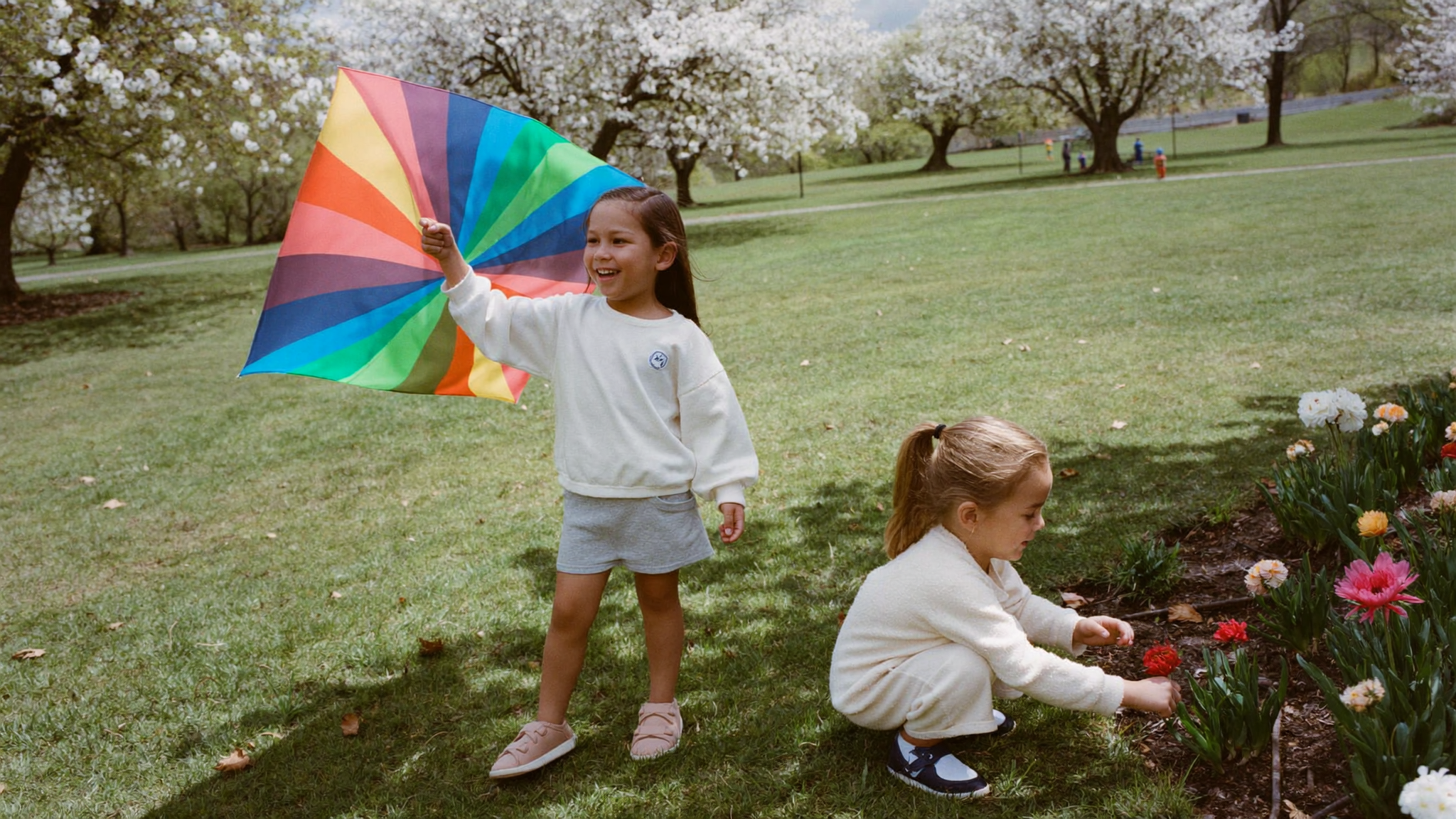
Spring is a great time for children to get outside, enjoy warmer weather, and try new activities. After months of colder temperatures and more time indoors, the season offers many opportunities for kids to move, explore nature, and use their creativity. Encouraging outdoor play and hands-on activities can support your child’s physical, social, and cognitive development.
Quick answer: Great spring activities for kids include outdoor sports, kite flying, biking, gardening, nature walks and scavenger hunts, simple STEM projects, and sensory play for babies and toddlers. Each one helps children stay active while building coordination, creativity, and curiosity.
Why is outdoor play good for kids in spring?
Running, climbing, and playing games are fun ways for kids to develop coordination, strength, and balance, while also connecting with their peers. Time outdoors after a long winter supports physical activity and gives children space to explore and use their imagination.
What are fun spring activities for active kids?
If your child is athletic, heading to the park to play sports like soccer or Frisbee is a fun way to get exercise and fresh air. Flying a kite combines movement with science, as kids learn how the wind keeps the kite in the air. Biking through the neighborhood or on local trails is another great option. For an adventurous child, build an obstacle course using items like cones and sticks to challenge them to jump, crawl, and balance, which improves coordination and problem-solving.
What creative spring activities can kids try?
For artistic kids, try creative projects like painting rocks or drawing with sidewalk chalk. These get kids outside, encourage imagination, and help develop fine motor skills. Spring is also a wonderful time for gardening. Planting flowers, herbs, or vegetables teaches children about the life cycle of plants and gives them a sense of responsibility as they help care for the garden and watch their plants grow.
How can kids connect with nature in spring?
Taking a walk through the neighborhood, a park, or a nature trail lets kids observe seasonal changes like blooming flowers, budding trees, and returning wildlife. Turn outings into a scavenger hunt by searching for different leaves, flowers, birds, or insects. Children can also start a nature journal to record discoveries, or try birdwatching, which introduces them to different species and sparks interest in wildlife.
What spring STEM activities work for kids?
STEM stands for Science, Technology, Engineering, and Math, and it focuses on hands-on learning. Through activities like planting seeds, building structures, or simple experiments, children learn to ask questions, test ideas, and solve problems. These experiences build critical thinking, creativity, and teamwork, and teach kids that trial and error is part of learning.
What spring activities are good for babies and toddlers?
Spending time outdoors lets young children explore through sight, touch, and sound. Spread a blanket on the grass so babies can observe trees and other outdoor sights, and let them feel grass or leaves to develop sensory awareness. Simple crafts like painting or decorating rocks build motor skills while combining sensory exploration with play.
Frequently asked questions
Why is outdoor play good for children in spring?
Running, climbing, and playing games help children build coordination, strength, and balance while connecting with peers, supporting physical, social, and cognitive development.
What are good spring activities for active kids?
Playing sports like soccer or Frisbee, flying a kite, biking on local trails, or setting up a simple obstacle course with cones and sticks all keep kids moving and build coordination and problem-solving.
How can babies and toddlers enjoy spring activities?
Spread a blanket on the grass so babies can observe trees and animals, let them feel grass or leaves for sensory awareness, and try simple crafts like painting or decorating rocks to build motor skills.
What are spring STEM activities for kids?
Planting seeds, building structures, and doing simple experiments let children ask questions, test ideas, and solve problems, building critical thinking, creativity, and teamwork.
If you have questions about your child’s health or development, please call our office. Peninsula Pediatrics proudly cares for families across the Rockaways, including Rockaway Park, Belle Harbor, Neponsit, Rockaway Beach, Arverne, and Far Rockaway.