
Protecting Kids from Heat and Sun

Summer is just around the corner and the weather will be getting hotter! While this is a fun season as kids get a break from school and can play outside more, you’ll want to keep them safe from extreme heat and the sun’s harmful rays. We have some safety tips to share for your family to have a great summer!

Firstly, it’s important to keep track of the hot temperatures. Temperatures over 90°F can cause dehydration, heat exhaustion, or a heat stroke. When the temperatures are this high, it’s best to limit the amount of time your kids spend outside and to keep them indoors with an air conditioner. You can also keep them cool by dressing them in lightweight, loose, and light-colored clothing and use ice packs if needed. A cool bath or a swim in the pool can be helpful as well.

Make sure to keep your children hydrated with water. Remind them to drink water throughout the day. The more active or older they are the more water they’ll need. Babies under 6 months should only be given breast milk or formula, however. Be alert for heat stroke which occurs when the body overheats and starts to shut down. Signs of this include excessive sweating, rapid pulse, confusion, dehydration, fever, abnormal breathing, or muscle spasms. If you notice these, contact the ER immediately and use a cool towel or an ice pack to cool your child. 

It’s also important to remember to never leave your child in a hot car. The inside of a car can reach high temperatures quickly that even a few minutes is dangerous. Keep your car keys out of reach and your car doors locked so that your child is unable to go inside a car unnoticed. It’s also good to remind them that cars are not safe places for them to hide in.

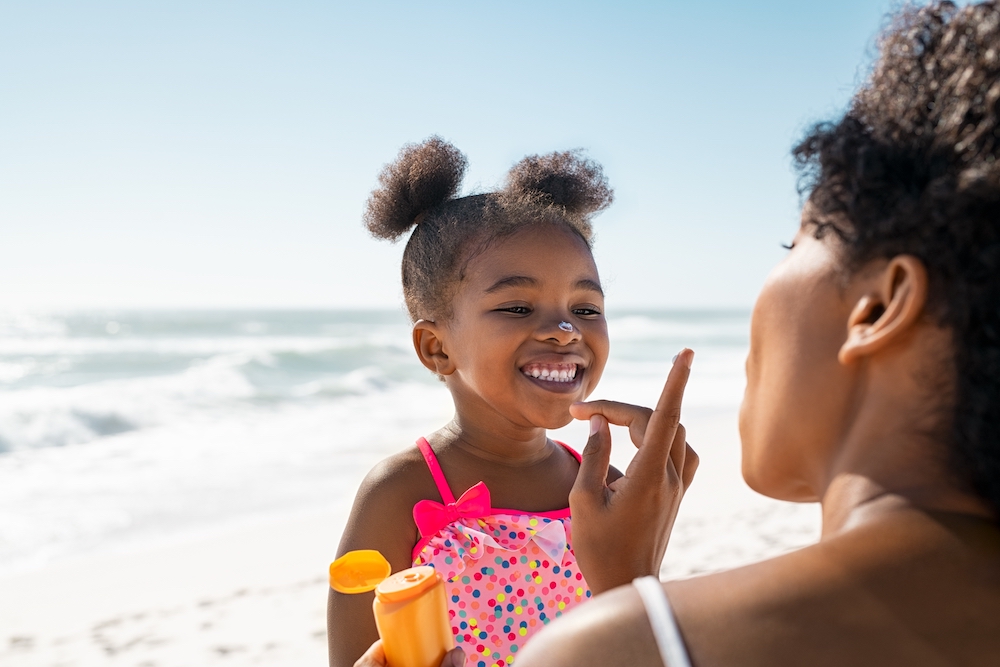
When your kids are playing outside, protecting them from getting a sunburn is essential. Limit sun exposure as much as possible during peak sun intensity hours, typically 10am-4pm.  Babies under 6 months of age should be kept under the shade to avoid direct sunlight. Avoid skin exposure to the sunlight for children through lightweight clothes and hats. Sunglasses should be used to protect their eyes. For skin that is exposed, cover it up with a liberal amount of sunscreen, avoiding the eyelids. As sunscreen takes some time to absorb, rub it in well and apply it 15-30 minutes before your child goes outside.  It’s also important to reapply sunscreen every 2 hours, or anytime time after a lot of sweating and swimming.  Although many sunscreens are labeled as water-resistant, none are truly water proof.  Even on cloudy days, sunscreen should be used as up to 80% of the sun’s UV rays can get through the clouds.

Choose sunscreen with a sun protection factor (SPF) of at least 30 and is labeled as “broad-spectrum” since this means it will screen both UVB and UVA rays. It’s best to avoid any sunscreen that contains oxybenzone as there are concerns of mild hormonal properties.  Keep in mind that even with sunscreen, kids can still get sunburns if they spend too long outside in the sun. If your child does get a sunburn, use an ice pack or cool compress and give them acetaminophen or ibuprofen if they’re in pain. Increase their hydration and stay out of the sun until the sunburn heals.  If you notice any infection or blisters or your child develops a fever, please contact our pediatrician. 
What You Need to Know About The MMR Vaccine

MMR Vaccine: Debunking Myths

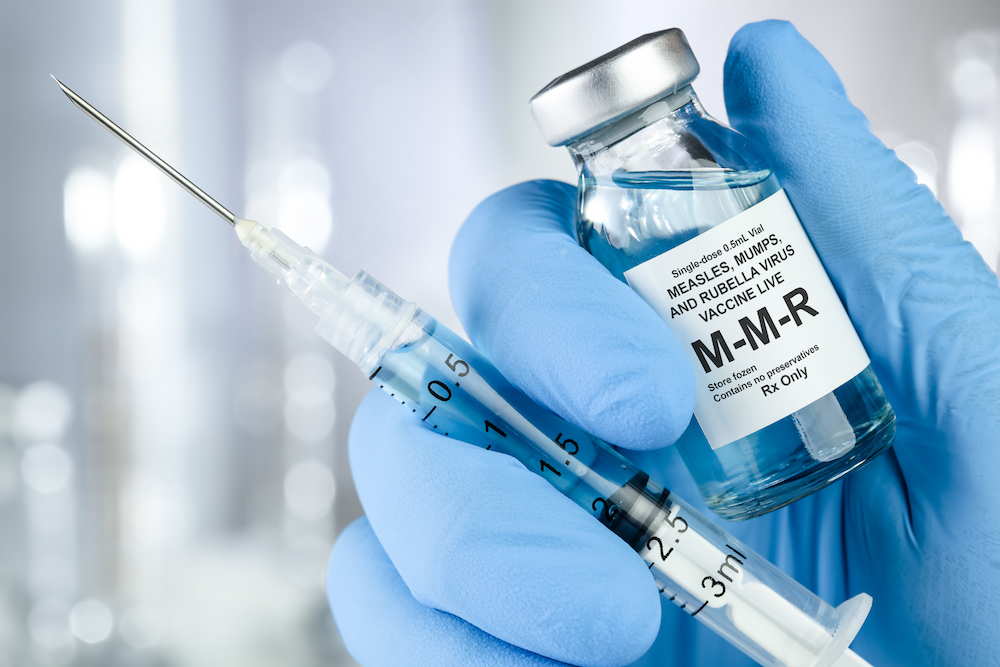
The MMR vaccine is an important vaccine for children to prevent infection from measles, mumps, and rubella. These three diseases are very common among children and the vaccine can protect them for life.

Measles, mumps, and rubella are contagious viral infections. Measles can cause high fever and severe flu-like symptoms such as cough and a runny nose, as well as pneumonia, ear infections, diarrhea, and a rash covering the body. In rare cases, it can also cause brain damage and lead to death. 

Mumps can also cause fever, in addition to muscle aches, tiredness, and loss of appetite. Most people will experience swelling of the salivary glands under the ears and a swollen jaw. It can also cause deafness and swelling of the brain, and in rare cases, lead to death.

Rubella has symptoms similar to measles, such as a fever, a sore throat, and rash. Other symptoms include headaches and eye irritation. It can also cause arthritis in teenagers and adult women. For pregnant women, there’s a high risk of miscarriage or the baby being born with serious birth defects. 

Due to the severity of these diseases, it is highly recommended that children receive 2 doses of the MMR vaccine, with the first dose administered at 12 months of age and the second one administered at ages 4. Sometimes during outbreaks, a third dose may be recommended. And for babies traveling outside the US between 6 months and 11 months, it is best that they receive the vaccine prior to travel.

There are many myths regarding the MMR vaccine. Below are some of them along with facts.

Myth: The vaccine can cause autism.

Fact: There is no scientific data indicating a connection between the two. There is, however, a lot of evidence that the vaccine does not cause autism.

Myth: The vaccine is fatal.

Fact: No deaths have been associated with the vaccine among healthy people. The vaccine may have side effects such as fever, dizziness, soreness, a rash, and swelling, which are usually temporary. There are other rarely documented side effects which are not commonly seen. It’s important to note that vaccines undergo a vetting process before being approved and for most children, the vaccine is safer than the risk of getting infected by Measles, Mumps or Rubella.

Myth: The MMR vaccine can cause measles.

Fact: The vaccine is made from a live virus, although it does not contain measles and the virus is weakened to the point that it cannot cause disease. Instead, it causes your body to recognize the virus and develop immunity. 

Myth: The MMR vaccine does not protect people from Measles, Mumps or Rubella.

The MMR vaccine is the best way to prevent the spread of Measles, Mumps and Rubella and saves thousands of lives every year. As Measles, Mumps and Rubella are highly contagious, outbreaks occur in the US. But the vaccine has been able to lower the number of deaths and the number of people infected. While proper sanitation can help, Measles, Mumps and Rubella can be spread from person to person and through the air. 

Why can’t I just get them as separate vaccines?  A Measles vaccine, a Mumps vaccine and a Rubella vaccine separately?

The Measles, Mumps and Rubella vaccines are not manufactured separately in the United States, it is only available as a combination vaccine of MMR.  They have not been available as stand alone vaccines since the 1970s in the US. Some reasoning for this is that the combination vaccine was proven to have superior effectiveness and less risk of side effects.

At Peninsula Pediatrics, we firmly believe in the effectiveness of vaccines to prevent serious illness and to save lives as well as the safety of our vaccines.  We follow the vaccine schedule outlined by the Centers for Disease Control and Prevention (CDC) and the American Academy of Pediatrics (AAP).  If you have any questions or concerns about the MMR vaccine or any other vaccines, please contact our office. 

Sources:

https://www.cdc.gov/vaccines/vpd/mmr/public/index.html

https://www.healthychildren.org/English/safety-prevention/immunizations/Pages/Measles-Mumps-Rubella-Vaccines-What-You-Need-to-Know.aspx

https://www.idsociety.org/public-health/measles/myths-and-facts/

How to Reduce Holiday Stress

The holiday season can be fun and joyous as many of us get into the spirit and festivities. However, it can also be stressful for a lot of families, especially as you seek time to finish your holiday shopping, prepare for gatherings, fulfill social demands, and deal with changes in routines. We have some tips on how you and your family can manage and reduce the overwhelm and be able to enjoy the holidays.

Maintain your family’s routine as much as possible.

Your kids might want to stay up late on Christmas Eve and New Year’s Eve. Dinner might start an hour later than usual when you have guests over for a gathering. While it’s normal for schedules to fall out of sync on holidays, try to maintain your family’s typical routine on the days surrounding the holidays as much as you can. Make sure your kids are getting adequate sleep and eating well. Staying up late for New Year’s is fine but it’s important that your kids don’t fall into a new sleep pattern where they’re going to bed later than usual and waking up late. This can make returning to school after winter vacation more challenging.

Enlist your children’s help.

As a parent or caregiver, you probably have a lot on your plate. And preparing holiday dinners and gatherings can quickly make everything more stressful and exhausting. Your kids can pick up on that energy too and it can interfere with their own well-being. Try enlisting your children’s help in holiday tasks and preparations. Not only will that alleviate some of the workload on your end, but it will also be a fun way to engage the family in the holiday spirit. Playing music while decorating cookies or hanging up decorations together as a family can become fun activities and ease the stress of getting things done.

Set realistic expectations and learn to say no.

You don’t have to say yes to everything! If a party invitation is just one too many, it’s okay to say no. There’s a lot that goes on during the holidays, including parties and get-togethers. Be realistic with your schedule about what you can attend and what you can’t.

Follow health precautions to prevent illness.

Respiratory viruses like RSV, the flu, Covid-19, and the common cold have been spreading this holiday season and cases have been rising. Your child becoming sick can make the holidays more stressful. Ensure that your family is taking precautions, including regular hand-washing, disinfecting surfaces and objects, distancing from people who are sick, and wearing masks in high-risk spaces.

Don’t forget to unwind.

You might have a long to-do list, but always make time to unwind during the busyness. Doing so will give your family a break, time to relax and de-stress, and some peace. Down time can be sipping cocoa while watching a holiday movie or reading your kids a book.

It’s also good to check in on how your kids are doing. Holiday stress can sometimes affect children’s anxiety and mental health. Show them your support so that they feel comfortable opening up, which will allow you to be able to help them. And remember, we are also here for your family. Call our office if you need to reach us.

We hope you have a wonderful holiday season!