Halloween is an exciting time for families. While older children may look forward to Halloween for weeks, babies and toddlers might feel overwhelmed or find certain aspects of the holiday frightening. Whether your child is having their first or third Halloween, here’s how you can prepare them and make the holiday a safe and enjoyable experience for even the youngest trick-or-treaters.
Quick answer: Keep Halloween simple for babies and toddlers. Choose a costume that fits and keeps the face clear, trick-or-treat before dark with an adult, avoid choking-hazard treats, and head home early if your child is overwhelmed. Rockaway families can celebrate in whatever way works best for their little one.
How can I help my toddler feel comfortable with Halloween?
Start by talking to your toddlers about Halloween in advance to help ease their fears. Reading Halloween-themed books, explaining that costumes are just pretend, and practicing dressing up can help children feel more comfortable. You can also introduce Halloween through activities like pumpkin festivals, costume parades, or visits to children’s museums.
Remember that every child is different. If your little one isn’t interested in dressing up or participating in Halloween activities, that’s okay. There will be plenty of opportunities to celebrate as they grow.
What should my baby or toddler wear for Halloween?
If you do decide to dress your child up, keep comfort and safety in mind. Costumes should always fit properly. If they’re too long or bulky, your child can trip or fall. Babies’ and toddlers’ faces should also stay clear. Avoid masks, hats, and capes that could interfere with their ability to see, breathe, or move comfortably.
You’ll also want your child to stay away from potentially dangerous accessories like long sticks, swords, and other sharp or bulky props that can cause injuries. Additionally, it’s important to dress for the weather. If the temperatures get cold, make sure your child is wearing layers. A backup outfit can also be helpful in case there are diaper leaks, spills, and other unexpected accidents.
When is the best time to go trick-or-treating with young children?
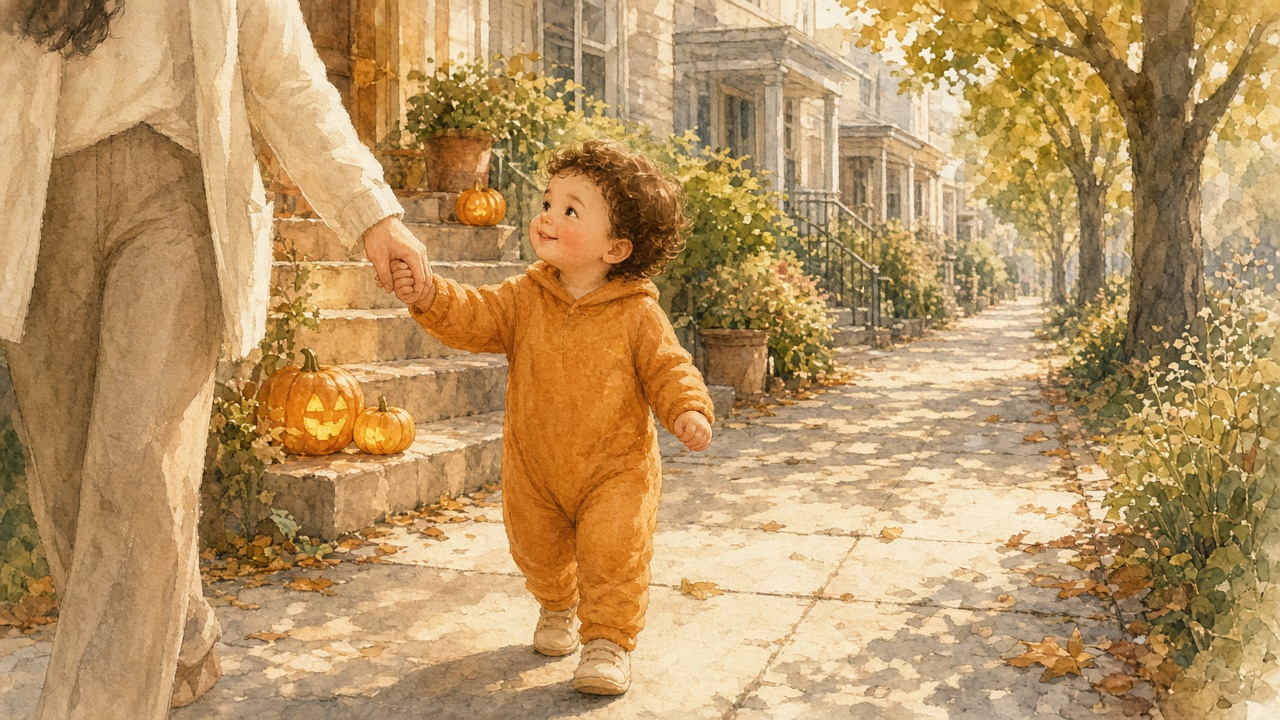
One of the most fun activities for Halloween is trick-or-treating. For young children, it’s best to take them before dark whenever possible. This makes it easier to maintain regular bedtimes while avoiding some of the challenges of navigating busy streets at night. If you head out after dark, stay on well-lit sidewalks, use crosswalks, and consider adding reflective materials to costumes and treat bags. Young children should always be accompanied by an adult.
When you go trick-or-treating, don’t feel pressured to visit every house. It’s okay to head home early if your toddler becomes tired, frightened, or overwhelmed. There are other fun activities to do at home instead, like pumpkin decorating, coloring, or reading stories together.
Which Halloween treats are choking hazards?
If your child is indulging in Halloween treats, pay close attention to choking hazards and food allergies. The American Academy of Pediatrics (AAP) advises avoiding hard candies, gummy candies, popcorn, caramel apples, gum, whole nuts, and other small treats that may cause choking. Even candy wrappers and small toys can pose risks.
What should I know about Halloween treats and food allergies?
For children with a food allergy, carefully read ingredient labels before allowing them to eat anything. Fun-sized candies may contain different ingredients than regular versions, and some products may contain traces of allergens. Consider offering non-food treats instead, such as bubbles, crayons, or stickers, while keeping small items out of reach of children who might put them in their mouths. You can also offer seasonal foods like pumpkin puree for babies who have started solids or soft roasted apples for older toddlers.
What if my child gets scared of Halloween?
Your child’s first few Halloweens don’t have to be elaborate to be memorable. Whether you’re dressing up for family photos, visiting a pumpkin patch, or enjoying a few treats at home, the goal is to make the holiday fun without overwhelming your little one.
Lastly, if your child gets frightened by some of the Halloween activities and costumes, remind them that it’s all pretend and that if they’re not comfortable participating this year, they don’t have to. Halloween can look different for every child, and it’s important to celebrate the holiday in a way that’s best and safe for them. By helping them prepare ahead and having a variety of activities as options, you can ensure a fun Halloween experience for your little one.
Frequently asked questions
Are masks and hats okay for babies and toddlers on Halloween?
Babies’ and toddlers’ faces should stay clear. Avoid masks, hats, and capes that could interfere with their ability to see, breathe, or move comfortably.
When should I take my toddler trick-or-treating?
For young children, it’s best to go before dark whenever possible. If you head out after dark, stay on well-lit sidewalks, use crosswalks, and consider adding reflective materials to costumes and treat bags. Young children should always be accompanied by an adult.
Which treats should I avoid giving young children?
The American Academy of Pediatrics (AAP) advises avoiding hard candies, gummy candies, popcorn, caramel apples, gum, whole nuts, and other small treats that may cause choking. Even candy wrappers and small toys can pose risks.
What can I do if my child has a food allergy?
Carefully read ingredient labels before allowing your child to eat anything, since fun-sized candies may contain different ingredients than regular versions and some products may contain traces of allergens. You can offer non-food treats such as bubbles, crayons, or stickers instead.
If you have questions about keeping your little one safe this Halloween, please call or contact our office. Peninsula Pediatrics proudly cares for families across the Rockaways, including Rockaway Park, Belle Harbor, Neponsit, Rockaway Beach, Arverne, and Far Rockaway.