

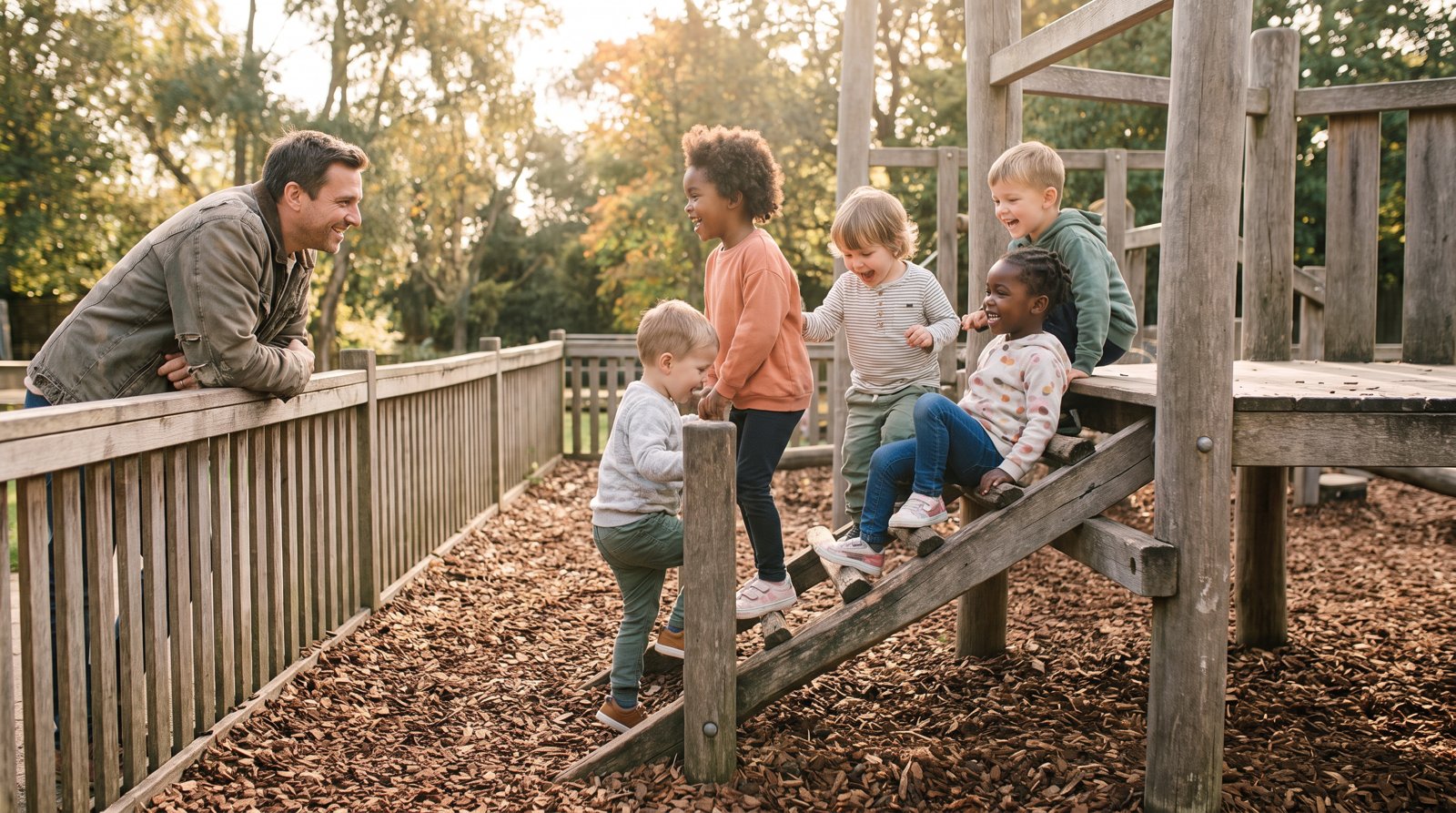
Playgrounds are fun places for children to play outside and build strength, coordination, balance, confidence, and social skills while encouraging creativity and physical activity. Although playgrounds are designed for fun, they can also be a common place for childhood injuries. Fortunately, many playground injuries can be prevented with proper supervision, age-appropriate equipment, and safety habits.
Quick answer: Many playground injuries can be prevented. Stay nearby and supervise, choose equipment that fits your child’s age, look for soft surfaces such as wood chips, mulch, or sand, check for broken or hot equipment, and teach safe habits. Rockaway parents can use these steps at any local playground.
Why does adult supervision matter on the playground?
One of the best ways to keep children safe is through constant adult supervision. While it’s important to let kids explore and play independently, parents and caregivers should stay nearby and pay attention to what children are doing. Young children, in particular, may not recognize hazards or understand their own physical limits. Being present allows you to step in if a situation becomes unsafe and provide guidance when needed.
How do I choose age-appropriate playground equipment?
Choosing a playground that matches your child’s age is another important safety precaution. Many playgrounds have separate play areas designed specifically for toddlers and preschoolers versus older school-aged children. Equipment that is too large or challenging for younger children can increase the risk of falls and injuries. Encourage your child to use equipment that is appropriate for their age, size, and developmental abilities.
What kind of surface is safest under playground equipment?
The surface underneath playground equipment is just as important as the equipment itself. Falls are the leading cause of playground injuries, but a soft, shock-absorbing surface can help reduce the risk of serious injuries. Materials such as wood chips, mulch, sand, pea gravel, or safety-tested rubber surfaces are safer than concrete, asphalt, grass, or packed dirt. If you have playground equipment at home, make sure there is adequate protective surfacing extending around swings, slides, and climbing structures.
What should I check before my child starts playing?
Before your child begins playing, take a quick look around the playground. Check that the equipment appears sturdy and well maintained. Watch for broken parts, loose bolts, rust, splinters, sharp edges, or hot metal surfaces that could cause burns on sunny days. Home playground equipment should also be inspected regularly to ensure it remains safe and stable over time. If you’re installing playground equipment at home, carefully follow the manufacturer’s instructions for assembly and anchoring. You’ll also want to make sure equipment is placed on level ground with adequate clearance around it.
What safe playground habits should kids learn?
Teaching children safe playground habits can help prevent injuries. Remind kids to use playground equipment as it is intended. They should slide down feet first instead of headfirst, avoid climbing up slides while others are coming down, and hold onto handrails or bars when climbing. Children should also avoid pushing, shoving, or roughhousing on playground equipment, as these behaviors can easily lead to falls or collisions.
How can children use swings safely?
Swings are often a favorite playground activity, but they require extra caution. Children should always sit on swings rather than stand or kneel on them. They should also hold on with both hands and wait until the swing has completely stopped before getting off. Additionally, it’s important to teach children never to walk or run in front of or behind moving swings, since being struck by one can cause serious injuries.
What should children wear to the playground?
Another thing to keep in mind when it comes to playground safety is proper clothing. It’s always best to dress children in comfortable clothing that allows them to move freely and avoid clothing with drawstrings, long scarves, necklaces, or cords that could become caught on playground equipment, increasing the risk for strangulation. Bicycle helmets should also be removed before children play on the playground because the helmet can become caught in openings or structures.
What should I do if my child bumps their head?
Even with precautions, accidents can still happen. If your child bumps their head while playing, observe them closely. Many minor bumps cause only temporary pain or swelling. However, if your child loses consciousness or has repeated vomiting, unusual sleepiness, severe headaches, trouble walking and speaking, or seizures, seek medical attention right away. These symptoms could indicate a more serious head injury that requires prompt evaluation.
Frequently asked questions
What is the leading cause of playground injuries?
Falls are the leading cause of playground injuries. A soft, shock-absorbing surface can help reduce the risk of serious injuries.
Which surfaces are safer under playground equipment?
Wood chips, mulch, sand, pea gravel, or safety-tested rubber surfaces are safer than concrete, asphalt, grass, or packed dirt.
Should my child wear a bicycle helmet on the playground?
No. Bicycle helmets should be removed before children play on the playground because the helmet can become caught in openings or structures.
When should I seek medical attention after a head bump?
Seek medical attention right away if your child loses consciousness or has repeated vomiting, unusual sleepiness, severe headaches, trouble walking and speaking, or seizures.
For any questions about your child’s safety on playgrounds, please contact our office. We’re here to help keep your children safe and healthy. Peninsula Pediatrics proudly cares for families across the Rockaways, including Rockaway Park, Belle Harbor, Neponsit, Rockaway Beach, Arverne, and Far Rockaway.